













 ₹https://stores.zigly.com/locations/-in-gurugram/-in-sectors-47-and-49/zigly-pet-care-pet-grooming-pet-products-in-sectors-47-and-49-gurugram--7dnC4e/articles/dog-potty-training-at-home-in-sectors-47-and-49-gurugram-a-step-by-step-guide-for-new-pet-parents--ee6de0f1-183a-4d3c-8700-803fcb5ad2ad
Zigly Pet Care - Pet Grooming & Pet Products, Sectors 47 and 49, gurugram
Vet Clinic, Pet Grooming & Pet Products Shop in Sectors 47 And 49, Gurugram, Haryana
Unit No BG-32, Block B, Ground Floor, Element One, Opposite Park Hospital, Sectors 47 and 49, gurugram, haryana - 122018
Book an Appointment
Zigly Pet Care - Pet Grooming & Pet Products Social Feeds in Sectors 47 and 49, gurugram
Dog Potty Training at Home in Sectors 47 and 49, gurugram: A Step-by-Step Guide for New Pet Parents
Bringing home a new puppy is one of the most exciting moments for any pet parent. One of the first milestones you will navigate together is dog potty training. If you are feeling overwhelmed by accidents, confusion, or simply not knowing where to begin, remember that every dog can be potty trained with the right approach. Whether you are raising a puppy in Sectors 47 and 49, gurugram or anywhere else, patience and consistency are the keys to success.
This step-by-step guide explains how to potty train a puppy at home, what to expect during the process, and how to overcome common setbacks with confidence.
Understanding the Basics Before You Begin
Before diving into the training process, it helps to understand a few important basics.
Puppies have small bladders. A general rule of thumb is that puppies can hold their bladder for about one hour per month of age, up to a maximum of around 6 to 8 hours. A 2-month-old puppy, for example, may need a bathroom break every 2 hours.
Consistency matters more than intensity. Short, frequent, and calm training sessions work much better than long, stressful ones.
Accidents are part of the process. They are not a sign of failure for you or your dog. They simply provide information that helps you adjust your routine.
Step 1: Choose a Potty Spot and Stick to It
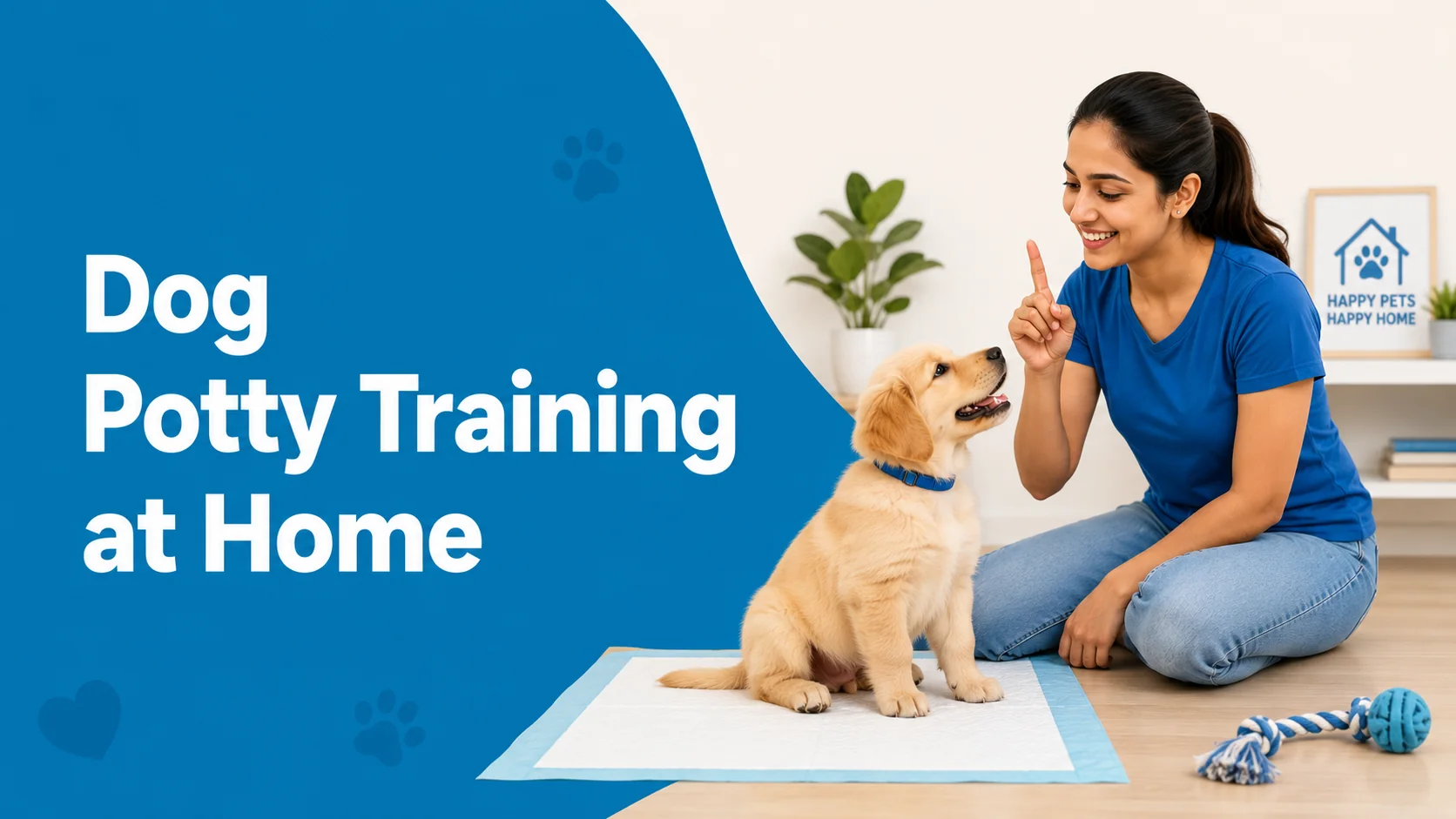
Pick one specific spot outside, or a designated indoor area such as a puppy pad or grass patch if you are using indoor training methods, where you want your dog to relieve themselves. Take your puppy to this exact location every time. The familiar scent helps your dog associate the area with bathroom breaks.
Tip: If you live in an apartment or have limited outdoor access, keep the indoor potty area in a quiet, easily accessible location away from your puppy's food and sleeping area.
Step 2: Set a Consistent Schedule
Dogs thrive on routine, and potty training is no exception. Take your dog to the designated potty area at the same times every day, including:
First thing in the morning after waking up.
After every meal, usually within 5 to 30 minutes.
After naps.
After playtime or energetic activity.
Right before bedtime.
For young puppies, include additional bathroom breaks every 1 to 2 hours during the day. As they mature and develop better bladder control, you can gradually increase the intervals.
Step 3: Watch for the Signs
Dogs usually give subtle signals before they need to go. Learn to recognise your puppy's individual cues, such as:
Sniffing the ground repeatedly.
Walking in circles.
Whining or barking near the door.
Pacing or appearing restless.
Scratching at the door or puppy pad.
As soon as you notice these behaviours, calmly take your puppy to the designated potty area.
Step 4: Use a Cue Word
Choose a simple command such as "Potty," "Go outside," or "Toilet" and say it consistently each time your dog is about to relieve themselves. Over time, your puppy will associate the cue with the action, making it easier to encourage them to go when needed, especially while travelling or following a busy schedule.
Step 5: Reward Success Immediately
Positive reinforcement is one of the most effective puppy training techniques.
As soon as your dog finishes using the correct potty spot, praise them enthusiastically and reward them with a small treat. The reward should be given within a few seconds so your puppy clearly connects the praise with the correct behaviour.
Avoid waiting until you return indoors because the association becomes less clear.
You can start by exploring the Applod Training Treats range to reward your little furry companion for every successful milestone.
Step 6: Supervise or Confine When You Cannot Watch
Whenever you cannot actively supervise your puppy, use a crate, playpen, or a safely enclosed area.
Dogs naturally avoid soiling the place where they sleep, making crate training an effective aid for potty training when introduced correctly. The crate should always be a comfortable and secure place, never a form of punishment.
If crate training is not suitable, keep your puppy on a leash indoors so you can notice early signs before accidents happen.
Step 7: Handle Accidents Without Punishment
This is one of the most important aspects of successful dog potty training.
If you catch your puppy in the act, interrupt calmly with a neutral sound and immediately guide them to the correct potty spot.
If you discover an accident afterwards, simply clean it thoroughly. Punishing or scolding your puppy after the event will not help because dogs cannot connect delayed punishment with past actions. It may even make them anxious about relieving themselves in your presence.
Clean thoroughly: Use an enzymatic cleaner to completely remove odour residue. Any remaining scent may encourage your puppy to return to the same indoor location.
Step 8: Gradually Build Independence
As your puppy becomes more reliable at signalling and holding their bladder, gradually increase the time between bathroom breaks and allow a little more freedom around the house.
Continue praising successful potty breaks. Over time, treats can gradually be replaced with verbal praise once the behaviour becomes a consistent habit.
How Long Does Potty Training Take?
Most puppies show noticeable improvement within 4 to 6 months, although complete reliability may take up to a year depending on breed, age, size, and consistency.
Smaller breeds often require a little longer because of their smaller bladders. Adult dogs learning a new routine, such as after moving home, may progress more quickly but still benefit from patience and regular practice.
Common Mistakes to Avoid
Inconsistent schedules that interrupt the routine.
Delayed rewards that weaken the learning process.
Punishing accidents instead of encouraging correct behaviour.
Giving unrestricted access to the house too early.
Incomplete cleaning that leaves lingering odours.
Helpful Resources to Keep Handy
Having the right supplies can make puppy potty training at home much easier.
An enzymatic stain and odour remover designed for pet accidents.
Puppy training pads or a fixed outdoor potty area.
A correctly sized crate or playpen.
Small, soft training treats for quick rewards.
A simple potty log or mobile app to record feeding, sleeping, and bathroom schedules during the first few weeks.
Conclusion
Dog potty training is just as much about learning your puppy's routine as it is about teaching them where to go. There will be accidents, unexpected setbacks, and moments that test your patience, and that is completely normal.
What matters most is staying consistent, following a predictable routine, and celebrating every small success. Before long, potty breaks will become a natural part of your daily routine together.
If you are looking for expert puppy care advice, dog training support, pet essentials, or new puppy guidance in Sectors 47 and 49, gurugram, visit your nearest Zigly Pet Care Centre for trusted advice and everything you need to give your furry companion the best possible start.