














 ₹https://stores.zigly.com/locations/surat/althan/zigly-pet-care-pet-clinic-pet-grooming-pet-products-in-althan-surat--42qAXq/articles/best-dog-training-tips-for-first-time-pet-parents---6c370af8-929e-4418-8f1e-071001144b9e
Zigly Pet Care - Pet Clinic, Pet Grooming & Pet Products, Althan, surat
Vet Clinic, Pet Grooming & Pet Products Shop in Althan, Surat, Gujarat
Oberon Business Complex, New Tirumala, Shivam Society, New City Light Road, Althan, surat, gujarat - 395007
Book an Appointment
Zigly Pet Care - Pet Clinic, Pet Grooming & Pet Products Social Feeds in Althan, surat
Best Dog Training Tips for First-Time Pet Parents in Althan, surat
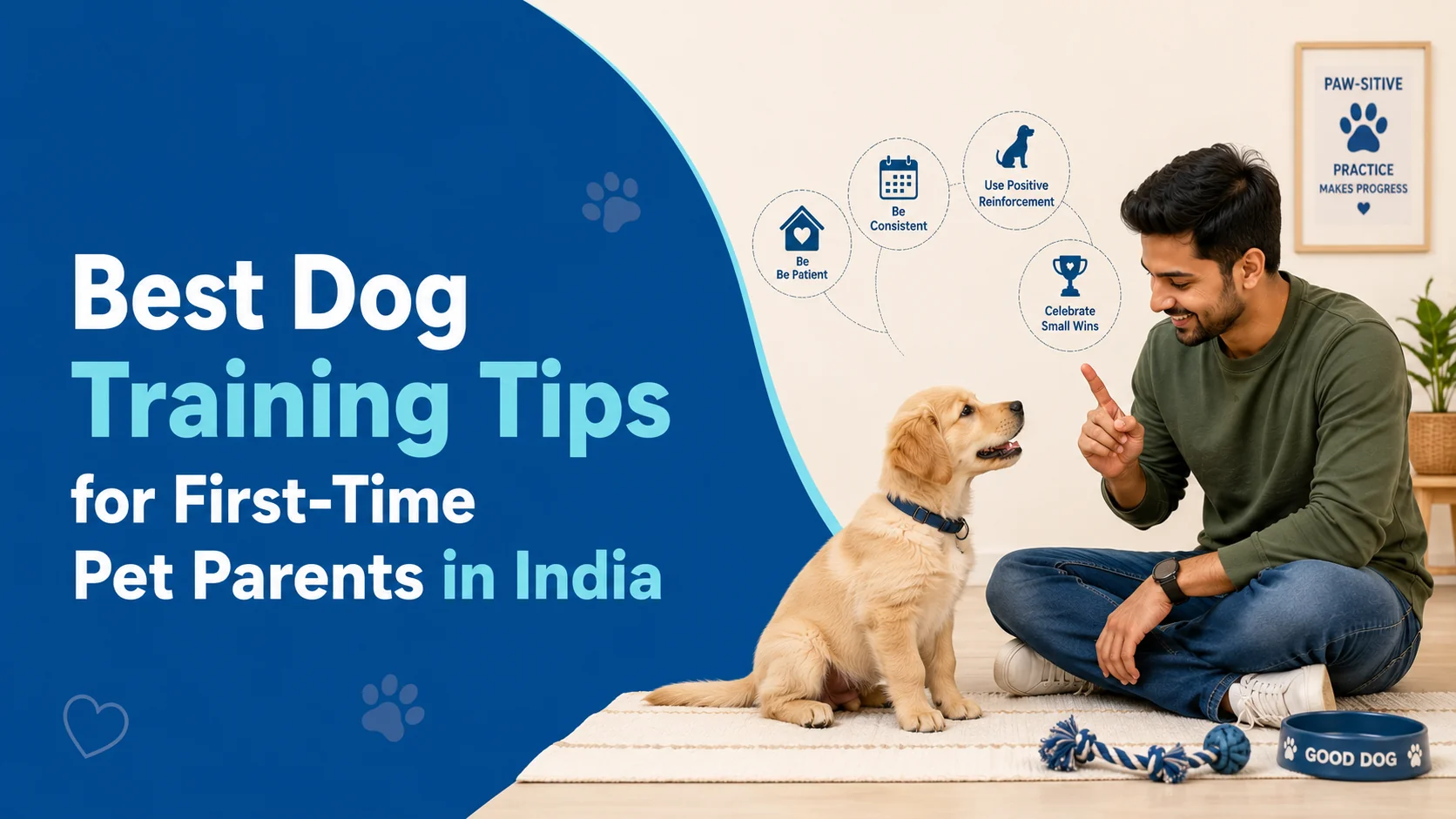
Bringing home a puppy or a rescue dog is one of life's most exciting decisions and also one of the most overwhelming. Between the chewed-up slippers, the 3 AM whining, and the "why won't he just listen to me" moments, first-time pet parents often find themselves googling everything at once. The good news: dog training does not have to be complicated. It is mostly about consistency, patience, and understanding how dogs actually think.
Whether you are welcoming a puppy into your home in Althan, surat or becoming a pet parent for the first time, here is a practical, India-friendly guide to help you get through those crucial early weeks and months with your new best friend.
1. Start with House Training (Potty Training) on Day One
This is usually the first hurdle every new pet parent faces, and it is less stressful when you have a routine from the start.
Set a schedule: Puppies typically need to go out after waking up, after meals, and after play sessions.
Pick one spot: Whether it is a specific corner of your balcony, the garden, or the street outside, consistency helps your dog recognise where they are supposed to go.
Praise immediately: Reward with a treat or verbal praise the moment they finish, not after they walk back inside. Dogs associate rewards with the action happening right then.
Accidents happen: Never scold after the fact. Dogs do not connect punishment with something that happened minutes ago. It just confuses and scares them.
For homes where taking your dog out is not always immediate, such as apartments or during the monsoon season, training pads can be a genuine lifesaver during the transition phase.
2. Get the Basic Commands Down Early
Sit, Stay, Come, and Leave It are the foundations of a well-behaved dog. Indian summers and crowded streets make "Come" and "Leave It" especially important. You do not want your dog chasing a stray cow or eating something off the road.
Keep training sessions short. Five to ten minutes, a few times a day, works better than one long session.
Use one consistent word per command. Avoid switching between "Sit" and "Baitho" randomly. Pick one and stick with it, even if the whole family uses it.
Always end sessions on a positive note, even if it is a small win.
3. Positive Reinforcement Works Better Than Punishment
Indian training traditions sometimes lean on scolding or physical correction, but modern, science-backed positive reinforcement dog training consistently shows that reward-based methods build trust faster and produce longer-lasting results.
Use small, high-value treats during training so your dog stays motivated without overeating.
Pair treats with verbal praise such as "Good Boy" or "Good Girl" so eventually you can phase out treats and rely on praise alone.
Never train when you are frustrated. Dogs pick up on your energy immediately, and a stressed trainer usually means a stressed learner.
4. Socialisation Is Non-Negotiable
A lot of behavioural issues in adult dogs, including fear, aggression, and excessive barking, trace back to poor socialisation as puppies.
Expose your puppy to different people, sounds such as traffic, festivals, and construction, and other vaccinated dogs early on, ideally between 8 to 16 weeks.
If you live in an apartment complex, short supervised walks in common areas help your dog get comfortable with everyday Indian street life, including auto-rickshaws, cyclists, other pets, and crowds.
Always check with your vet before starting outdoor socialisation, since vaccination timing matters.
5. Handle Chewing and Biting the Right Way
Puppy teething is real, and so is the destruction that comes with it. Instead of simply saying "No," redirect the behaviour.
Keep a variety of chew toys around so your dog always has an acceptable alternative to your furniture or footwear.
Rotate toys every few days to keep your dog interested. A "new" toy is always more exciting than the same one they have seen all week.
Interactive or puzzle toys are especially useful because they combine mental stimulation with the natural urge to chew, helping reduce destructive behaviour overall.
6. Leash Training for Indian Streets
Leash training matters a lot in India, where streets can be chaotic and off-leash walking is not always safe.
Start indoors or in a quiet space before taking your dog into busier areas.
Use a well-fitted collar or harness. Ill-fitting equipment can cause dogs to slip out or pull excessively.
Practice loose-leash walking by stopping every time your dog pulls, rather than pulling back. Dogs learn faster from consistent stillness than from a tug-of-war.
7. Crate Training Is Not Cruel. It Is Comfort.
Many Indian pet parents are hesitant about crates because they associate them with confinement. In reality, a properly introduced crate becomes your dog's safe personal space, especially useful during travel, vet visits, or when you need a few hours of uninterrupted work.
Introduce the crate gradually using treats and short, positive stays. Never force your dog inside as punishment.
Line it with a comfortable mat or bed so it feels inviting rather than restrictive.
8. Be Consistent Across the Whole Household
One of the most common dog training mistakes in Indian homes is inconsistency. One family member allows the dog on the sofa, another does not. One uses treats, another scolds. Mixed signals confuse dogs.
Sit down with everyone in the house and agree on the same rules and commands before you begin training.
If you have domestic help who regularly interacts with your dog, involve them in the routine as well.
9. Know When to Call in a Professional
Not every behavioural issue can be solved with online videos.
If your dog shows signs of aggression, extreme anxiety, or resource guarding, it is worth consulting a professional trainer or veterinary behaviourist rather than trying to solve the issue alone.
Early intervention prevents small issues from becoming lifelong habits.
Handy Products to Support Your Training Journey
A few well-chosen tools can make the whole process smoother. Zigly has a good range built specifically for training and early pet care.
Training treats and treat sticks: Small, tasty, and perfect for quick positive reinforcement during training sessions.
Interactive and puzzle toys: Great for mental stimulation, redirecting chewing, and keeping your dog engaged when you are busy.
Training pads: Useful during the potty-training phase, especially for apartment living.
Collars, harnesses, and leashes: Well-fitted gear makes leash training far more comfortable for both of you.
Training aids and sprays: Designed to help reinforce specific behaviours or discourage unwanted ones.
You can browse Zigly's dog essentials and dog training sections to find products that match your dog's age, breed, and stage of training.
Final Thoughts
Training a dog is less about obedience and more about building a relationship based on trust and communication. The early months will test your patience, but the habits you build now will shape your dog's temperament for years to come.
Go slow, stay consistent, celebrate the small wins, and do not hesitate to ask for help when you need it. Every experienced pet parent started exactly where you are now.
If you are looking for expert dog training tips, puppy care guidance, or pet care products in Althan, surat, visit your nearest Zigly Pet Care Centre or explore Zigly for everything you need to support your dog's training journey.