















 ₹https://stores.zigly.com/locations/sahibzada-ajit-singh-nagar/sector-70/zigly-vet-clinic-pet-grooming-pet-products-in-sector-70-sahibzada-ajit-singh-nagar--3uimSd/articles/does-my-indoor-kitten-really-need-vaccinations-wha--745cac4d-1704-4c7e-89a6-dcbcaf9cb634
Zigly - Vet Clinic, Pet Grooming & Pet Products, Sector 70, sahibzada ajit singh nagar
Vet Clinic, Pet Grooming & Pet Products Shop in Sector 70, Sahibzada Ajit Singh Nagar, Punjab
SCO No 526, Ground Floor, Sector 70, sahibzada ajit singh nagar, punjab - 160071
Book an Appointment
Zigly - Vet Clinic, Pet Grooming & Pet Products Social Feeds in Sector 70, sahibzada ajit singh nagar
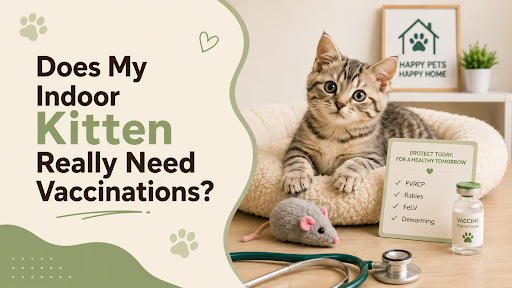
Does My Indoor Kitten Really Need Vaccinations? What Every First-Time Cat Parent in sahibzada ajit singh nagar Should Know
Your kitten has never set a paw outside. She does not meet other cats, does not wander the building compound, and does not have any contact with the outside world beyond the windowsill she watches it from. So when a friend mentions their vet's vaccination schedule, it is a genuinely reasonable question to ask: does an indoor kitten really need all of this, or is it just standard advice that does not quite apply to a cat who never leaves the house?
If you are a first-time cat parent in sahibzada ajit singh nagar, understanding kitten vaccinations can help you make informed decisions about your pet's health. It is a fair question, and the honest answer is more nuanced than a flat yes or no, though it does lean firmly toward yes, for reasons that are not always obvious from inside an apartment.
What Does "Indoor Only" Actually Protect Against?
Staying indoors genuinely does reduce exposure to several risks, fights with other cats, certain parasites, road accidents, and exposure to outdoor toxins. It is a real and meaningful layer of protection, and indoor cats do tend to live longer, healthier lives on average partly because of it.
What it does not fully protect against is disease transmission through indirect contact, which is more common than people assume. You can unknowingly carry pathogens home on your shoes or clothes after contact with another cat. A kitten can be exposed before you even bring them home, since several core kitten diseases can incubate silently.
If you ever board your cat, take them to a groomer, or bring home another pet, that indoor boundary gets crossed too. And if a window or balcony is ever left open, which happens more than most indoor-cat households like to admit, even brief outdoor contact is enough.
Core Kitten Vaccinations and Why They Matter
Core kitten vaccinations typically protect against feline panleukopenia, feline herpesvirus, and feline calicivirus, highly contagious diseases that do not require direct contact with another sick cat to spread, since some can survive on surfaces or be carried in on clothing and shoes.
These are generally considered essential vaccines for kittens, whether they live indoors or outdoors, because the transmission risk does not depend on your cat physically going outside.
Rabies vaccination is often required by law in many places regardless of a cat's outdoor access, and is worth checking with your vet even for a strictly indoor cat.
Where the Nuance Actually Lives
This is genuinely where indoor-only status makes a real difference: vaccines for diseases spread primarily through direct cat-to-cat contact or outdoor exposure, feline leukemia virus, for instance, are sometimes considered optional or lower-priority for a cat with truly no outdoor access and no contact with other cats.
This is a legitimate conversation to have with your vet rather than a blanket "get everything" approach. Your kitten's actual risk profile, indoor-only with zero other cat contact versus indoor-mostly with occasional exposure, genuinely should shape which vaccines make sense beyond the core set.
The mistake is not skipping non-essential vaccines after an informed conversation. It is skipping the core kitten vaccines based on the assumption that indoor life alone provides full protection, when the diseases those core vaccines target do not actually require outdoor exposure to reach your kitten.
A Rough Kitten Vaccination Timeline
Most kittens start their core vaccination series around 6 to 8 weeks old, with follow-up boosters roughly every 3 to 4 weeks until about 16 weeks, followed by a booster around one year and then typically every one to three years depending on the vaccine and your vet's recommendation.
Exact timing varies by kitten and by vet, which is exactly why this is worth mapping out with your vet directly rather than following a generic schedule found online.
What Staying Ahead Actually Looks Like for Indoor Kittens
The instinct to question whether every standard recommendation applies to your specific situation is a good one. It is exactly the kind of thinking that leads to better, more tailored care rather than blindly following a generic checklist.
The right move is not skipping vaccination because your kitten is indoors. It is having a specific conversation with your vet about which vaccines matter given your kitten's actual, real-world exposure, rather than either extreme of "skip everything" or "do everything without asking why."
A quick conversation with Zigly VetCare in sahibzada ajit singh nagar about your kitten's specific lifestyle can help you build a vaccination plan that actually fits your household, rather than a one-size-fits-all schedule.
For first-time cat parents in Sector 70, being indoors keeps your kitten safer from a lot of things. It is just not the same as being safe from everything, and now you know exactly where that line actually sits.
FAQs About Indoor Kitten Vaccinations
Do Indoor Cats Really Need Core Vaccines?
Yes, generally. Core vaccines for indoor cats protect against diseases that can spread through indirect contact, on clothing, shoes, or surfaces, not just direct contact with other cats. Indoor status alone does not eliminate the risk.
What Vaccines Might Indoor Kittens Skip?
Some vaccines aimed at diseases spread mainly through direct cat-to-cat contact or outdoor exposure, like feline leukemia virus, may be considered optional for kittens with truly no outdoor access. This should be discussed directly with your vet.
Can an Indoor Kitten Catch Diseases from a Pet Parent's Clothing or Shoes?
Yes, several contagious feline diseases can be carried indoors indirectly, which is one of the main reasons core vaccination is still recommended even for strictly indoor cats.
When Should Kittens Start Their Vaccination Schedule?
Most kittens begin their core vaccine series around 6 to 8 weeks old, with boosters roughly every 3 to 4 weeks until around 16 weeks, followed by further boosters into adulthood as advised by your vet.